Nieuwenhoven Nature Park
Master plan and construction of a new reception infrastructure for Nieuwenhoven Nature Park
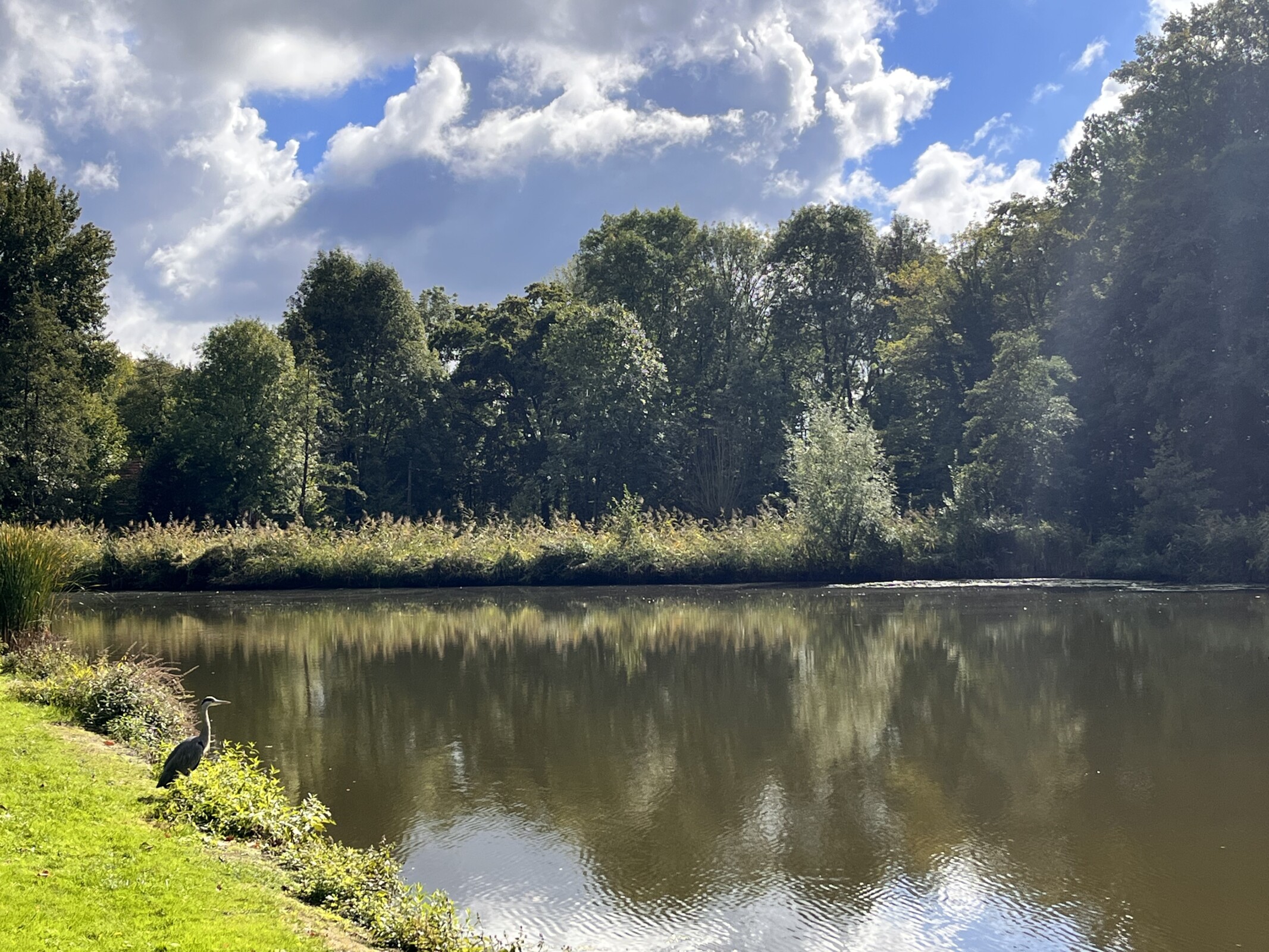
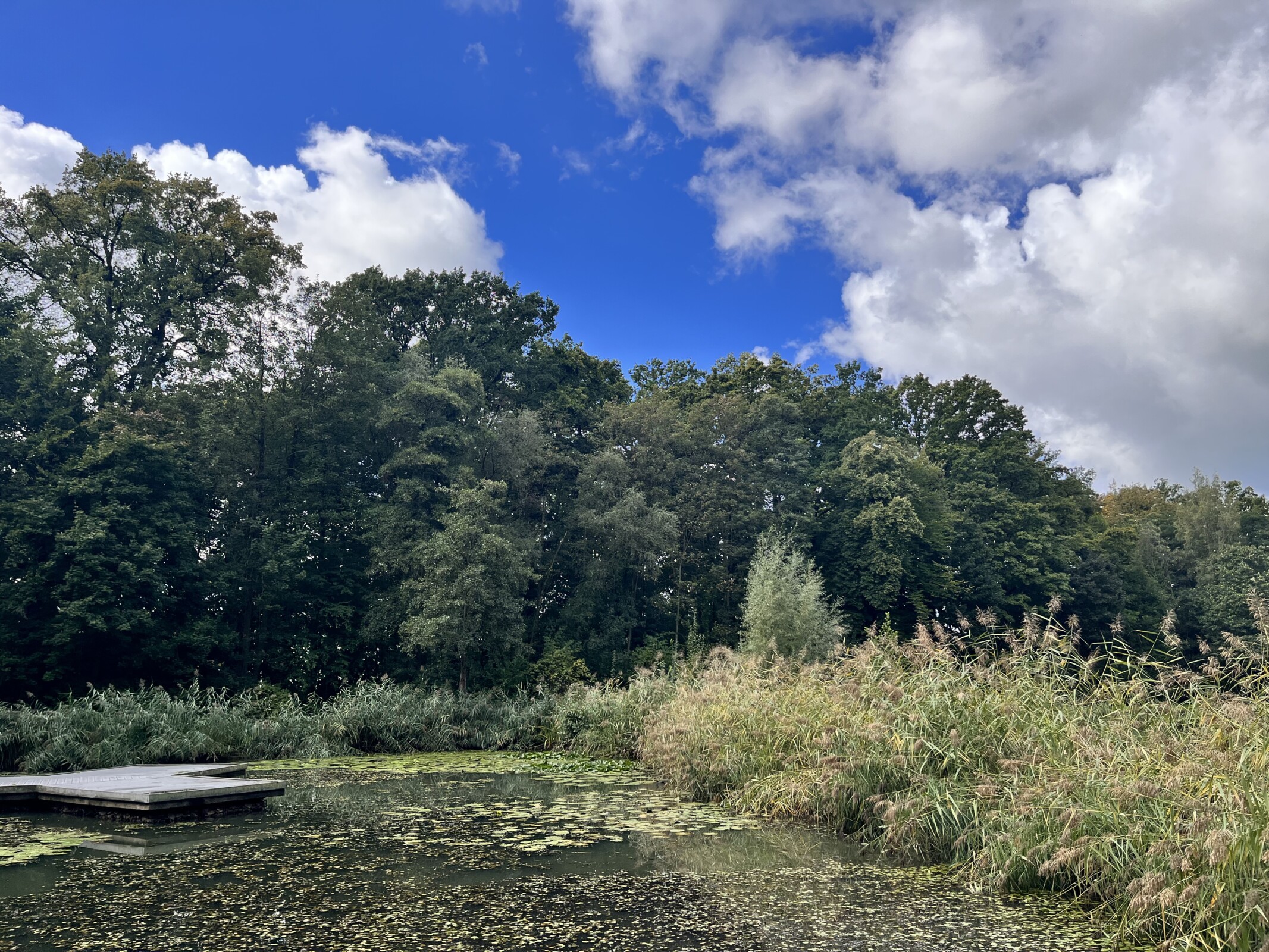
Nieuwenhoven Nature Park (before Nieuwenhoven Provincial Domain) is a 161-hectare public park forest and has a long and fascinating history. The different types of forest, the park, the grasslands, the water features, the orchards and the surrounding fields are remnants of this. Together with the largest and oldest forest in the Haspengouw region, they make Nieuwenhoven Nature Park a place with a very varied nature experience.
A master plan with nature in the leading role
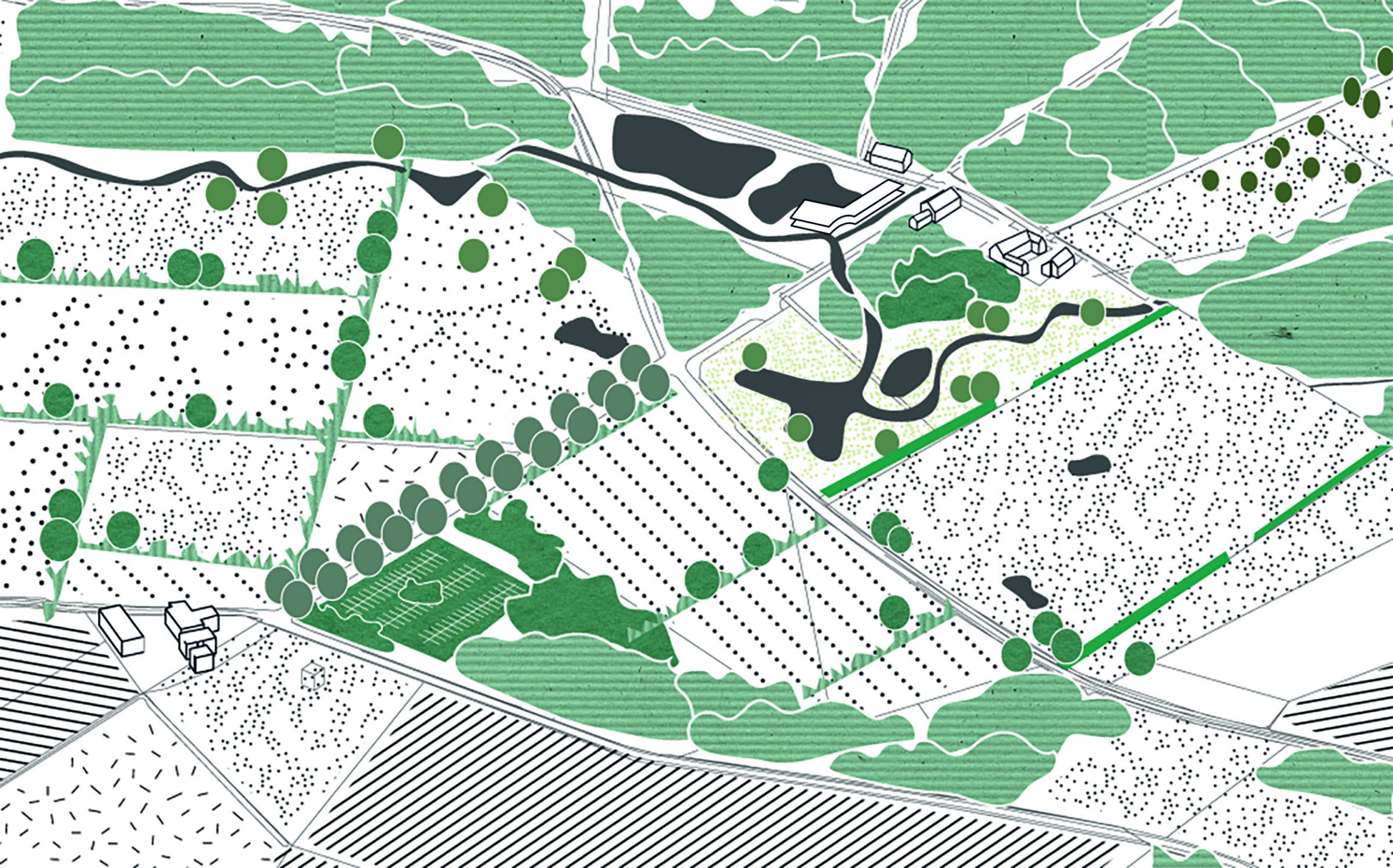
With the master plan, we are writing a new story based on the overarching vision of moving nature forward for today and the future. All landscape and architectural interventions are aimed at improving the quality of nature and intensifying and specializing its experience. We focus on increasing biodiversity, arranging and protecting natural biotopes and raising awareness of them among the general public. Both nature and the experience of nature will be greatly enhanced, allowing the domain to stand out even more than today as an outdoor destination.
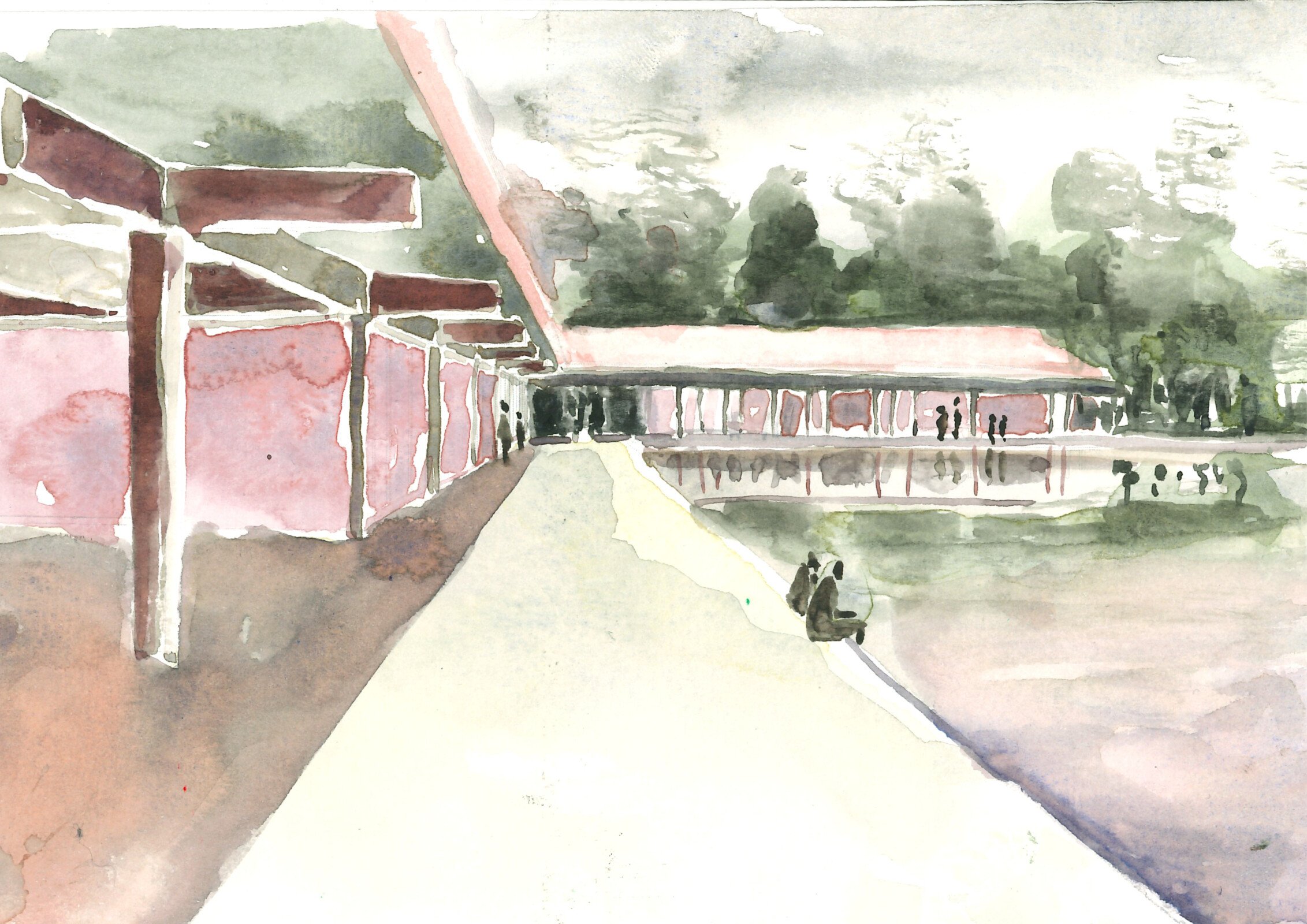
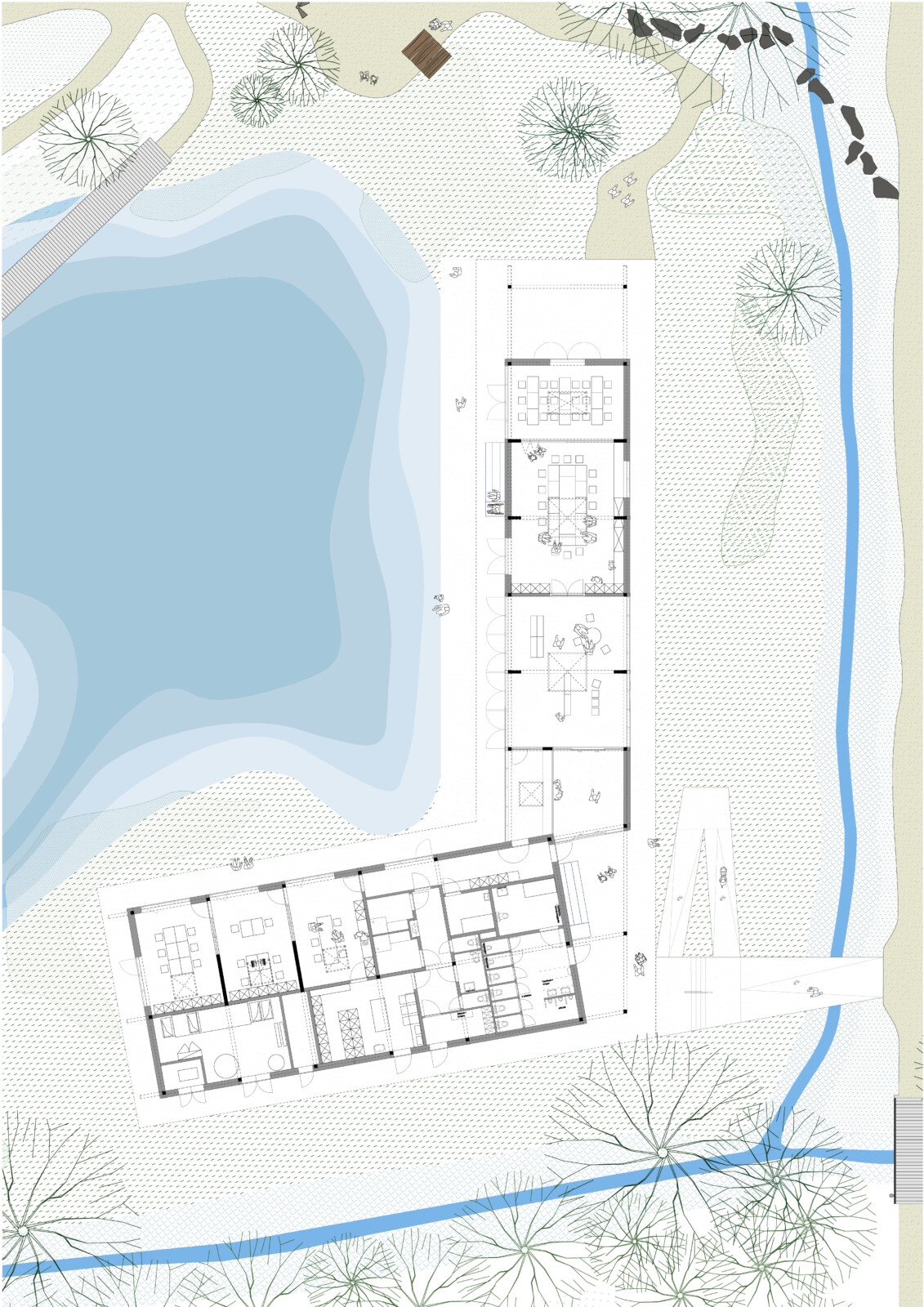
Along the avenue of trees, visitors will arrive at the welcome square with the new reception building. The natural fishpond, the forest, the waterscape and the flower garden of the future come together at this spot. The domain becomes clearly legible with vistas to more distant parts such as the new naturally landscaped playground. At the same time, benches provide pleasant spots in the greenery to linger. All nature experiences; those of the forest, the open space, the water and waterscape are highlighted and enhanced in all their characteristics. They show themselves to the visitor in their optimal form. Biological diversity will be maximized by, among other things, planting ‘clumps’ in the landscape, converting lawns into perennial flower meadows, creating a new flower garden of the future, sowing wide nature-friendly banks with native seeds, etc.
Water will once again become an important player in the landscape and visible, audible and tangible in various places. The Kelsbeek will be given room to meander at the new reception building, the educational pond and fishpond will be integrated with the guarantee of good water quality, and the existing water treatment plant, which will be updated, will be relocated in a newly constructed water landscape. In addition, the estate will be completely softened and equipped with pathways in naturally bound crushed stone that are permeable to water and wheelchair-accessible.
A reception pavilion that embraces nature
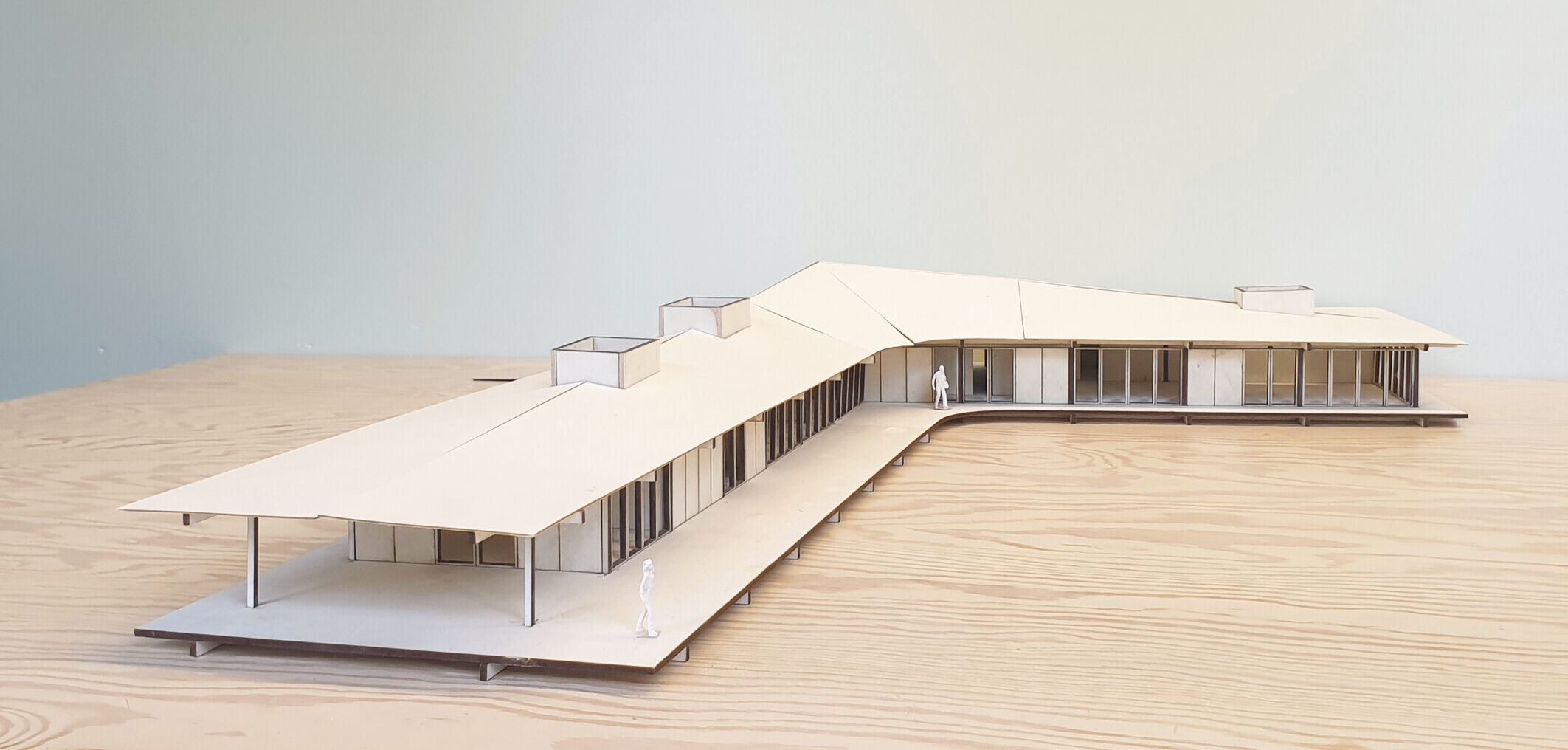
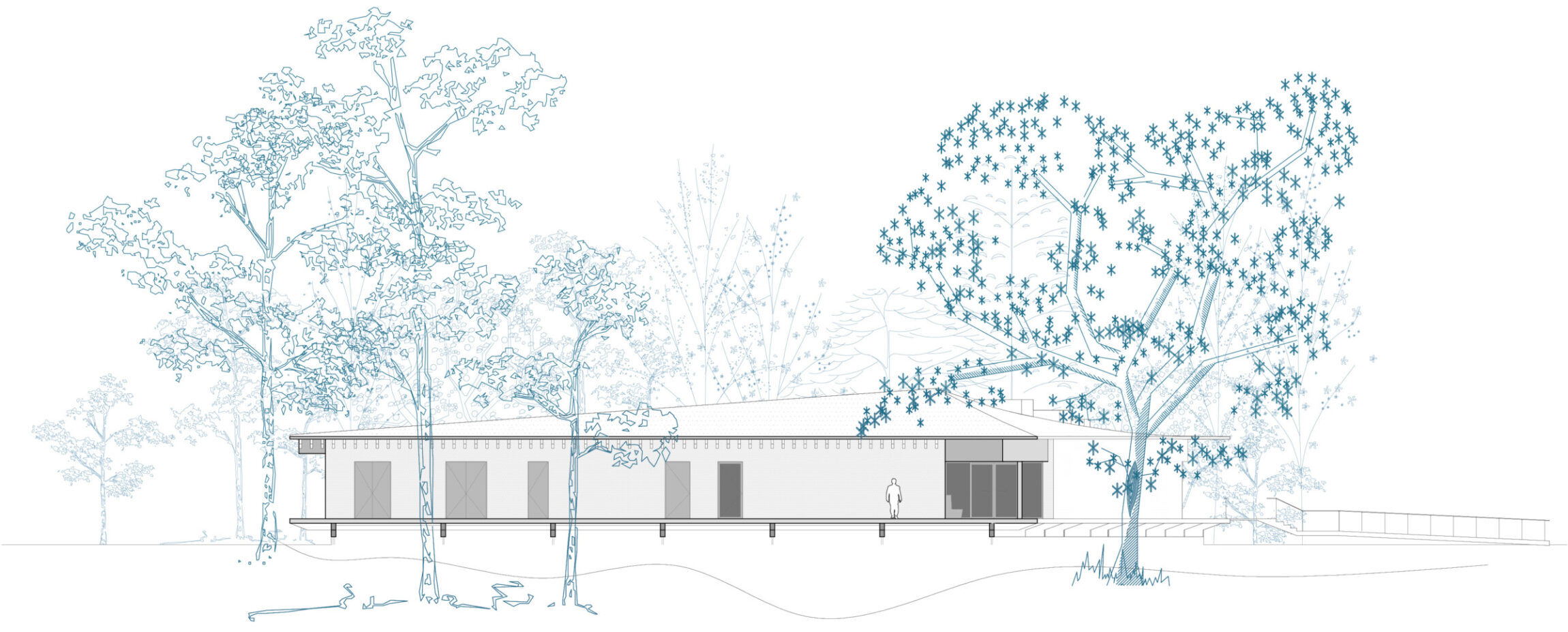
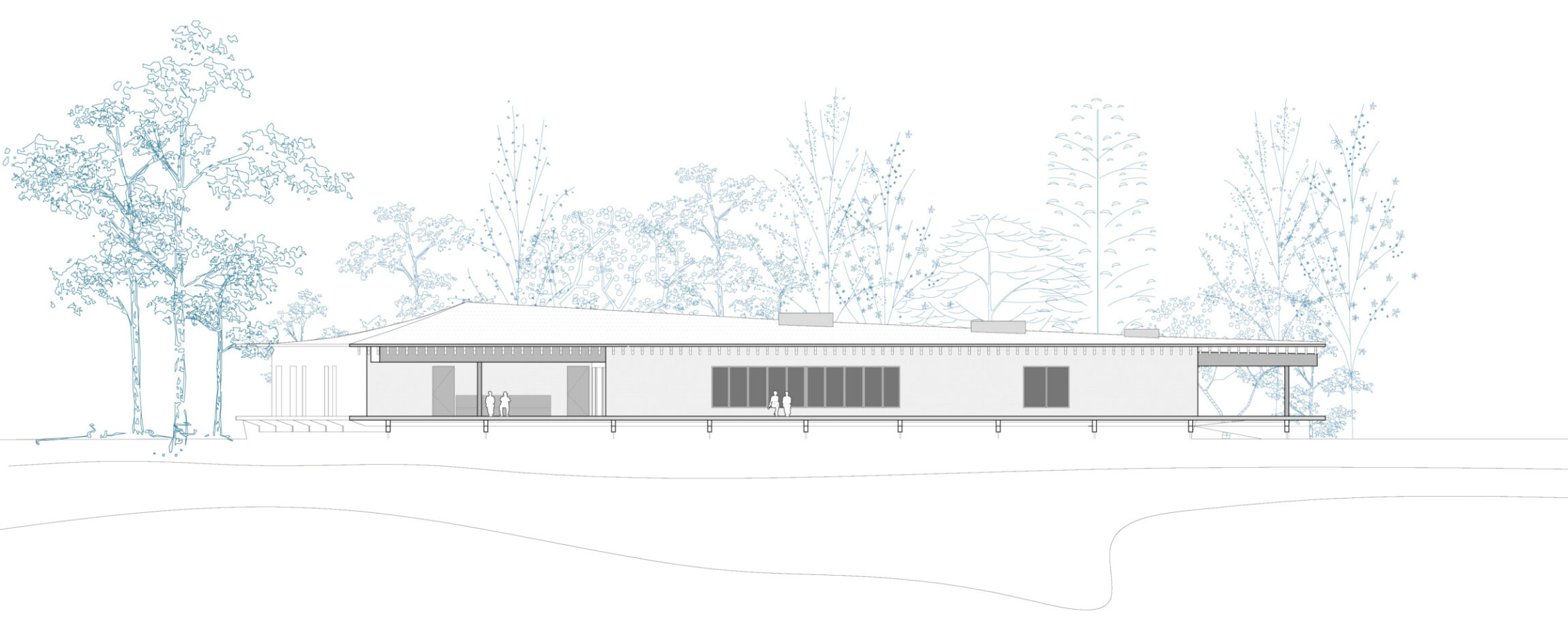
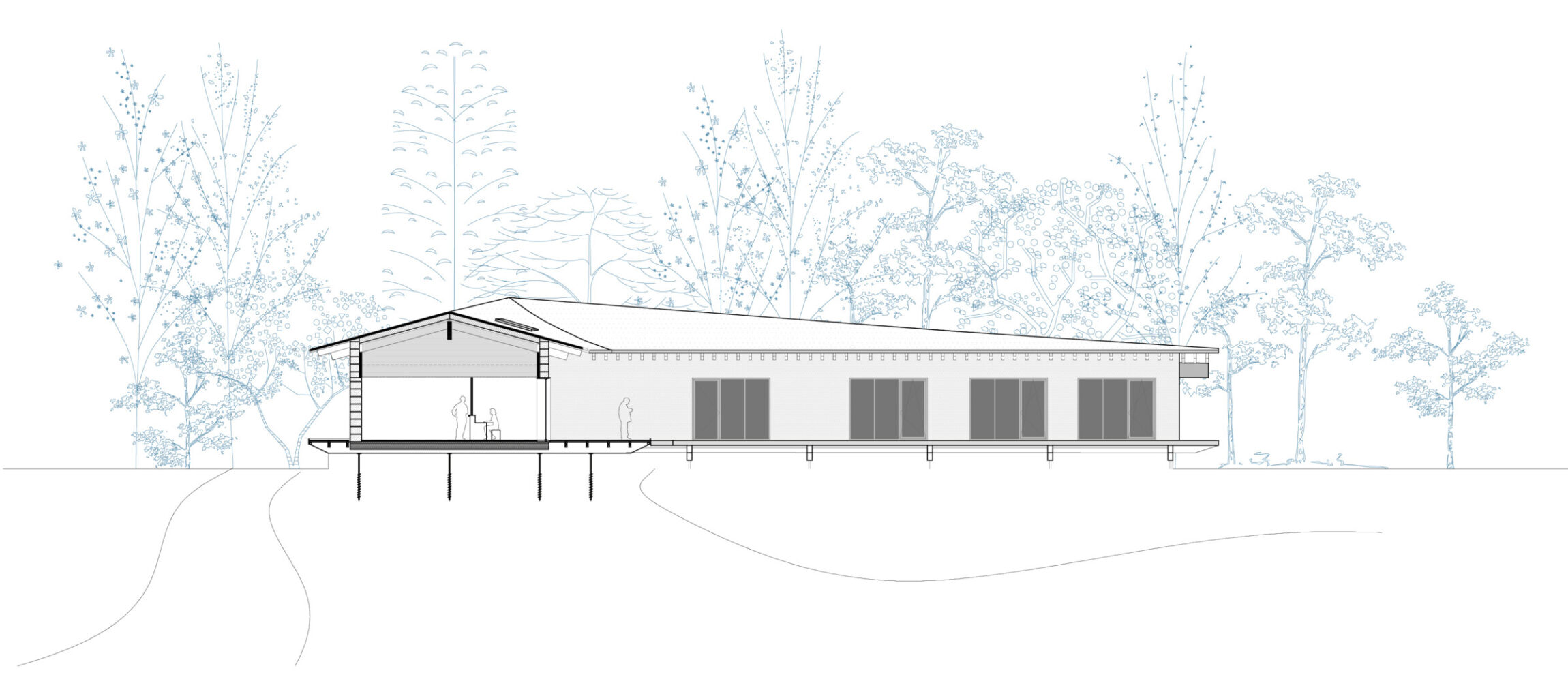
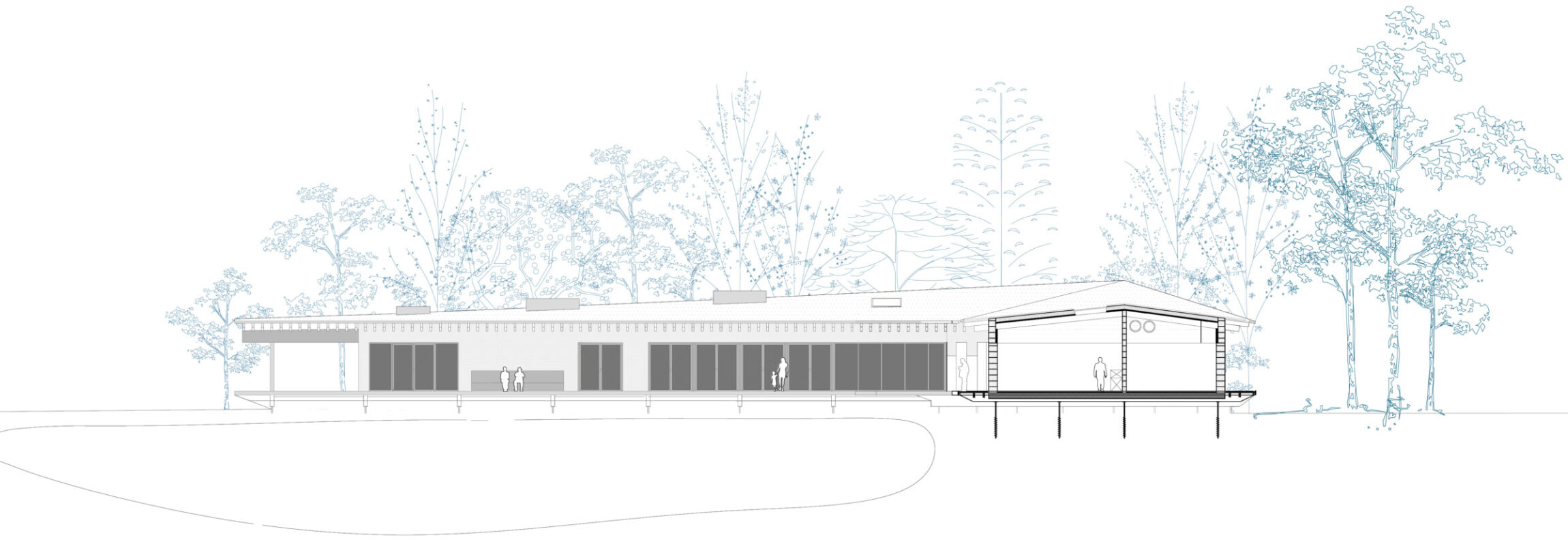
Caring for nature goes hand in hand with sustainability. Because the existing buildings on the domain no longer meet the current standards and requirements of an accessible reception building, we are centralizing all reception and operational functions in one new reception pavilion, thus minimizing the human footprint on nature. The pavilion will be placed like a stilt house in the flood-prone waterscape and built completely cementless using sustainable, natural materials such as wood, lime and hemp. It is circular in design, allowing it to be easily adapted to changing needs in the future or even dismantled with minimal environmental impact. Moreover, the building operates entirely without fossil fuels and makes maximum use of renewable energy sources, such as solar panels and aquathermal energy from the pond water, significantly reducing CO₂ emissions.
The reception pavilion immediately brings visitors close to nature. Surrounded by different types of landscape, it is where the water landscape, ponds, forest and the new welcome plaza come together with a visual relationship to the renovated play area. It seeks to connect with the landscape and, through its design, emphasizes the importance of preserving nature. Instead of drawing attention to itself, it underlines the beauty of the surrounding landscape.
A nature-inclusive building
A strong focus was placed on nature inclusivity from the very start of the building’s design phase, making it possible to integrate various nature-inclusive interventions. On the roof, a ballast layer of gravel was added, allowing mosses to gradually establish themselves over the years. Integrated into the roof is a large bat box, measuring 13 meters long and 50 centimeters wide, oriented to the southwest. The box is built with lamellae that provide passageways and make optimal use of the rising warmth beneath the sloped roof. This creates a layered thermal microclimate with different temperature gradients where bats can roost and move around. The box extends from the façade on the pond side, across the ridge beam, to the façade facing the forest, offering flight routes along both the forest and the pond—two complementary hunting grounds. At least eight bat species have been observed foraging here.
For birds, species-specific nesting boxes were designed and either built into the new building or added onto the restored existing structures. Under the roof overhang, nesting boxes for building-dwelling birds are fully integrated, matching the material palette and architecture of the pavilion. These include boxes for starlings, tits, and semi-open nesters such as spotted flycatchers, common and black redstarts, robins, and wrens. Beneath the wooden deck near the Kelsbeek stream, the grey wagtail finds its preferred nesting spot.
Insects, too, were considered from the very beginning of the pavilion’s design. Around the roof windows, insect towers were integrated, composed of detachable modules that allow the filling to be adapted to different insect species. Each module has a depth of 20 cm, filled at least 15 cm deep with materials such as reed, clay, and wooden logs with drilled holes—creating ideal nesting conditions for solitary bees, among others. Depending on the species, they choose different nesting sites: hollow stems, beetle tunnels, or self-dug burrows in sunny, open patches of soil, clay, or sand. By tailoring the infill of these modules, we create new habitat opportunities for these important pollinators.
In this centrally located reception pavilion, visitors can find information about nature, the domain and its history. Multi-purpose rooms can be used by schools to learn about and in nature or by local associations for all kinds of meetings or activities. The offices are housed in the quieter wing, while public sanitary facilities with accessibility label A++ are located at the covered reception area.
The existing forester’s house is spatially opened up and converted into an apiary for local beekeeping operations with a covered picnic area overlooking the new flower garden.
- client Province of Limburg
- location Sint-Truiden
- date 2023
- icw Dethier (design&build), Burolandschap (landscape)
- contractor Dethier
- engineering office Sweco
- nominations & awards Publica Award 2025 category Climate Responsability
- team NU Jarno Verlinde, Konstantijn Verbrugge, Olivier Van Calster, Armand Eeckels